
We stayed the night in a little cabin in a campground. At some point Chris woke up in the middle of the night and was able to not only see a possum (invasive and ruining everything) but also the Southern Cross. This is an important constellation, typically only seen in the Southern Hemisphere of the world. It’s an important navigational tool for sailors, so important, in fact that it’s on the New Zealand, Australian, Brazilian, Samoan and Papua New Guinean flags.
We obviously started our day with a flat white (coffee) and a pie. Then backtracked to see the Te Anau Bird Sanctuary. Birds in NZ are built differently, literally. They originally had absolutely no predators so they didn’t need to have any protective measures, including flight. The kiwi is a famous flightless bird but there is also the kākāpō, a parrot who lives on the ground; the takahē beautiful dodo-bird looking fellow who doesn’t fly (currently featured in the Air New Zealand safety videos); and the weka, a kleptomaniac little chicken. These four birds are, obviously very threatened and some have even been declared extinct. If you never evolved to fly and suddenly predators exist (in the form of feral cats, rats, stouts, possums) you’re going to get eaten. Some of these were introduced accidentally, and some were introduced to stop the other ones. Either way they’re a problem. Their eggs also get eaten or crushed (wild pigs, dogs, etc). New Zealand has a huge initiative to be Predator Free by 2050. Even at the time of writing this, a feral cat responsible for at least 30 deaths of introduced duck (pāteke) as well as endangered kiwi and lizards has finally been dispatched and it made international news.
What I’m getting at, is that some of these birds are extremely rare. Kiwi are so rare you have to spend around $30 NZD to see them and cannot take any photos. We were very excited to see a bird sanctuary because there’s something about millennials turning 30 that make them suddenly birders. We also just wanted to see threatened bird species outside of an indoor for-profit setting. The bird sanctuary is free but has places for for donations. There were loads of interpretive signs that explained the history and success stories of protecting or bringing back these rare birds.
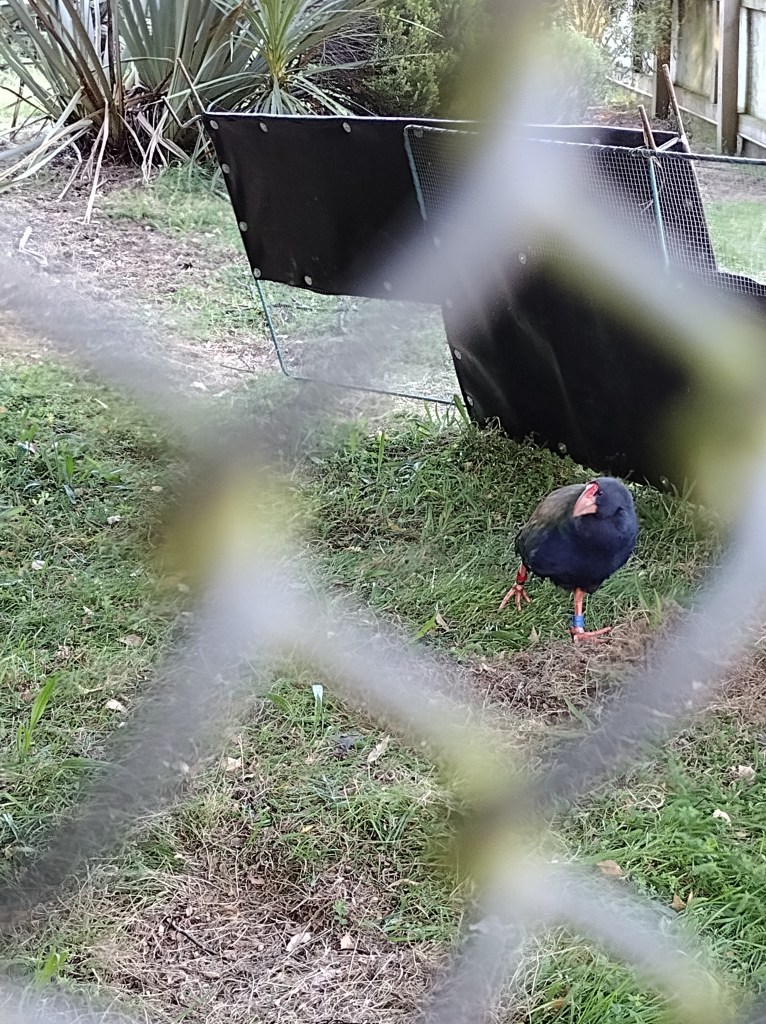
We were there when they were feeding the takahē so we got to see them up close.
We then walked over to the Department of Conservation Fiordland Visitor Center. Having both work(ed) as park rangers we were excited to go see our fellow conservation officers and employees. They ended up not being very jazzed to talk to us (we probably came in too excited). The biggest thing we learned was that they call elk wapiti. This was extremely shocking to us, as we also call elk wapiti based on the Shawnee word for the animal. The big difference was the intonation, Americans say “wah-pee-tee” while the lady at the front desk kept correcting us to say “wap-pit-tee”. We asked why they called it that and she had no idea. Turns out they were a gift from none other than President Theodore Roosevelt in 1905, by 1923 there was a lottery system to hunt them. This is still happening to this day (around 25 slots and thousands of applicants, sounds a little like Colorado’s moose tags).
Our big road trip, which would last the next 10+ days was now at its most southernly point. From here we would backtrack back up north through the Queenstown area to eventually return the rental car at Auckland to fly out. While we backtracked north we had heard Mossburn had some of the cheapest gas so we went there. Keep in mind its only our second or third day driving on the “other” side of the road. But now we had a moment in the movies where the numbers fly behind the main characters head as they do some heavy math. We were using New Zealand dollars, filling up with liters, not gallons. How the hell were we supposed to know what was cheap or expensive at that point? Probably someone who didn’t have an American education could do that math, but I couldn’t. We had to flip the car around a few times before we got the correct side and not diesel. Chris put the nozzle in the numbers just shot up, he almost ripped it out. Turns out they charge gas in cents, not dollars but watching the moneys go up we briefly wondered what we had wrought upon ourselves. We ended up paying $89.64 NZD for 36.35 liters of gas, the equivalent to $5.50 USD for a gallon of gas (on March 5th 2026, current US prices at the time was $3.64 for a gallon). Prices were, obviously, about to go up. We celebrated by getting a pie and a flat white. As one does.
We drove past Queenstown, up to Arrowtown, famous for its quaint little downtown, historical buildings, mining history and fall leaves. It was just early autumn so leaves weren’t really changing yet but the town was cute. It’s a preserved mining town from the 1860s gold rush (Colorado’s gold rush is also during this time). Having grown up near mining towns ourselves this was cute to see the Silverton, Colorado equivalent of New Zealand. You can rent gold panning pans and try your hand in the river.
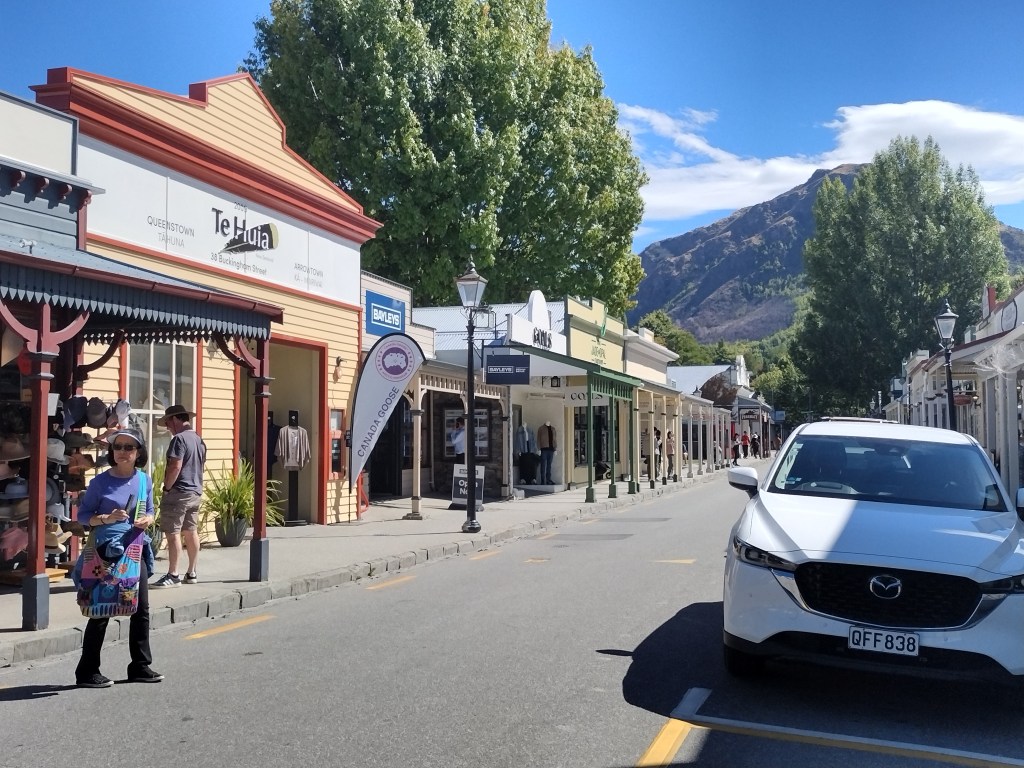
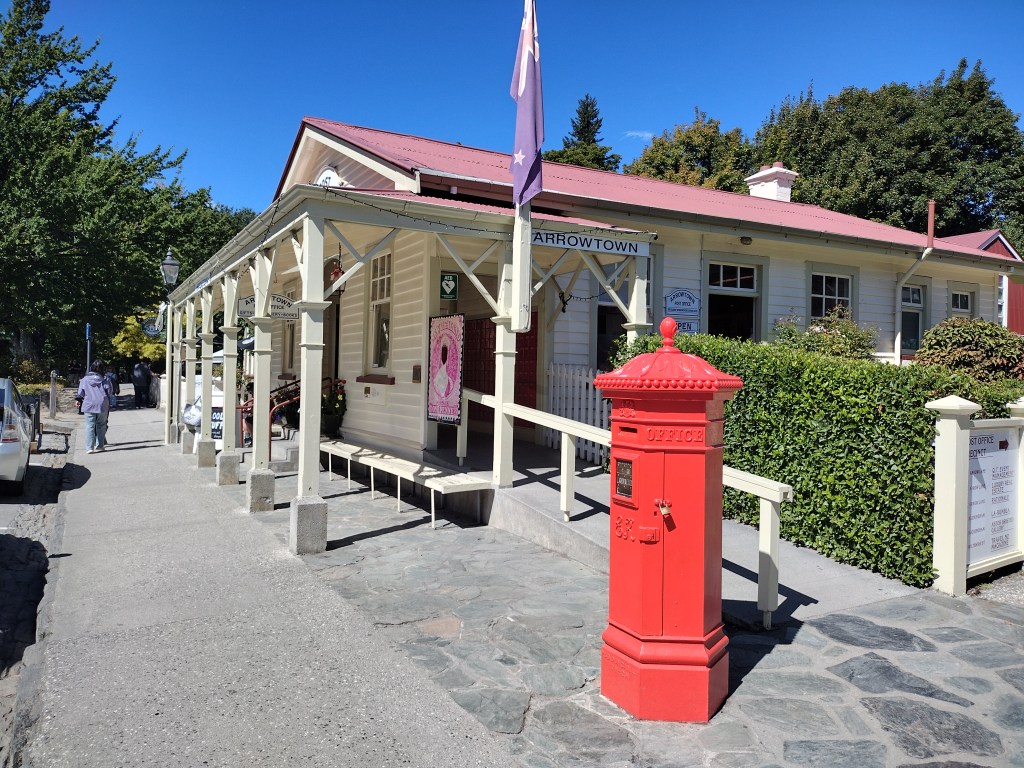
We ended up parking next to the Historic Arrowtown Chinese Settlement which we also found interesting. Chinese miners were invited to the area after local European miners left for Australia. Another shared history between us all.
We had downloaded a map that showed where every Lord of the Rings filming location had been. You could tell one was nearby because there were Lord of the Rings tour guides and even some guys dressed as elves leading tours. This is extremely niche but in the scene where Frodo has been stabbed by the the Witch-king of Angmar and is being rescued by Arwen on horseback… she crosses a river. And this river crossing is just outside of Arrowtown. Cool, right!? So we obviously walked over to see where this river crossing scene had been filmed.
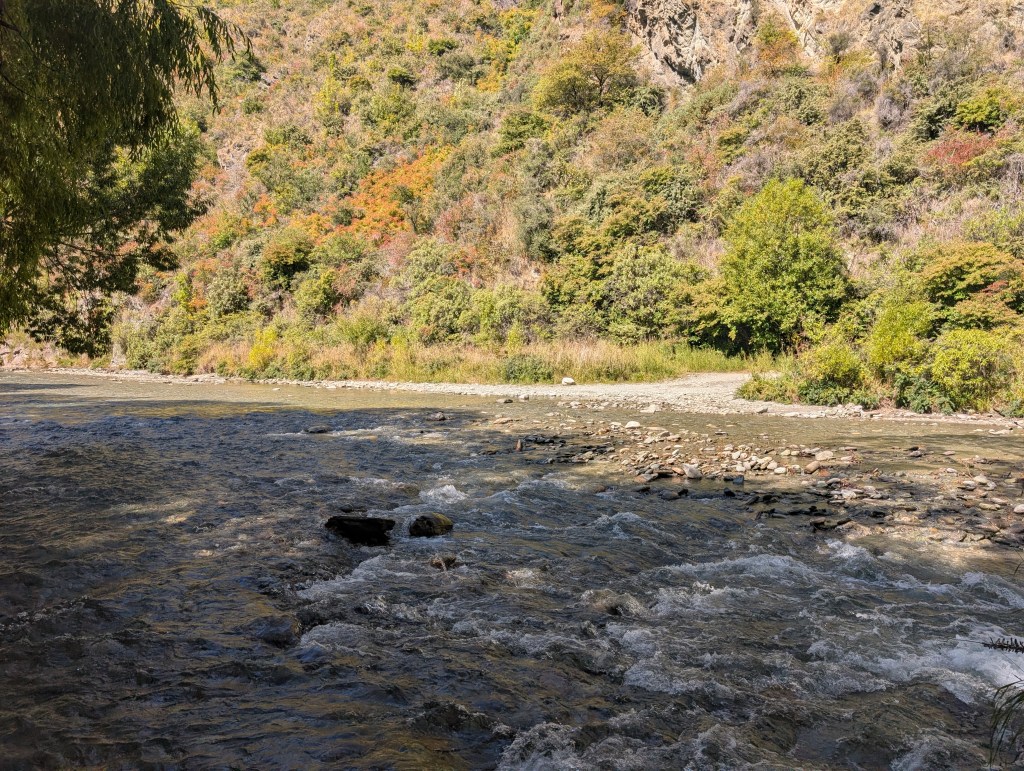
This photo is pretty at least because the leaves are just starting to change color. We got some ice cream then headed north for about 45 minutes to Wanaka.
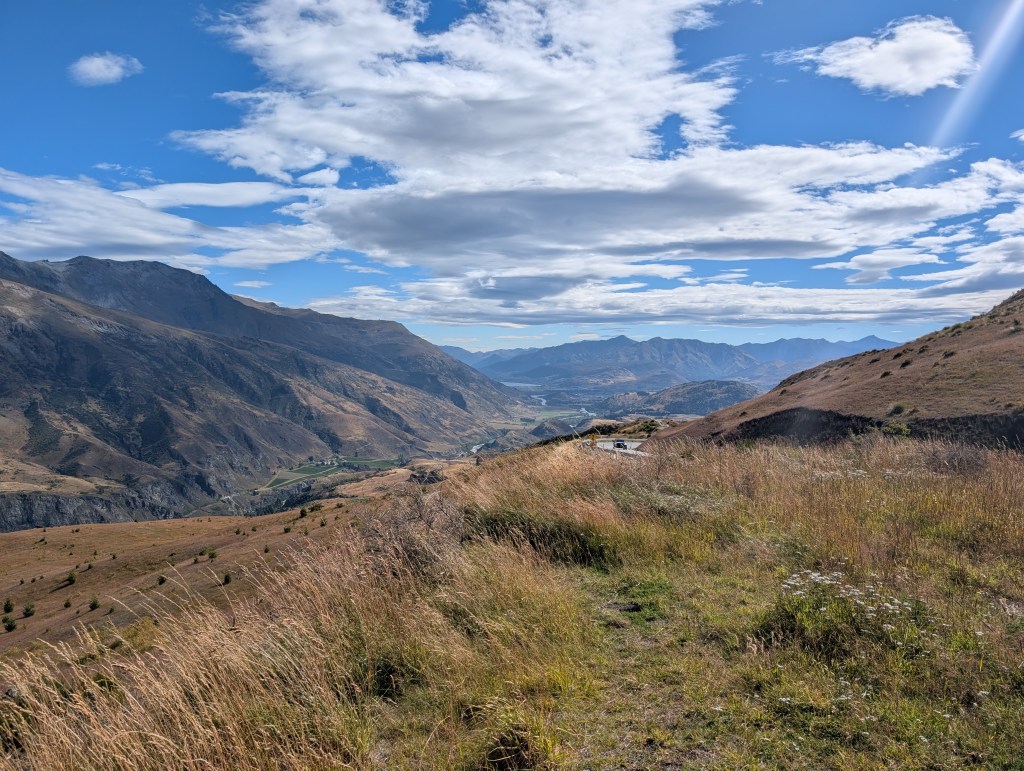
The drive was gorgeous. We planned originally on hiking Roy’s Peak the following day. This is an arduous but rewarding hike that is arguably the most famous in New Zealand. Instagram photos have sortof ruined the hike for people but we were still feeling sick so we didn’t find out. We had both caught some kind of cold and were on day 3 feeling not super great. So we decided not to do the hike. We still got to see Instagram’s other famous thing in the area: “That Wanaka Tree”. That’s its name and even Google Maps showed that name as the location.
It was a lovely stroll on a lakefront walking path down to the tree. It’s a willow tree partially submerged but its the background and area that make it just so beautiful.



Leave a Reply